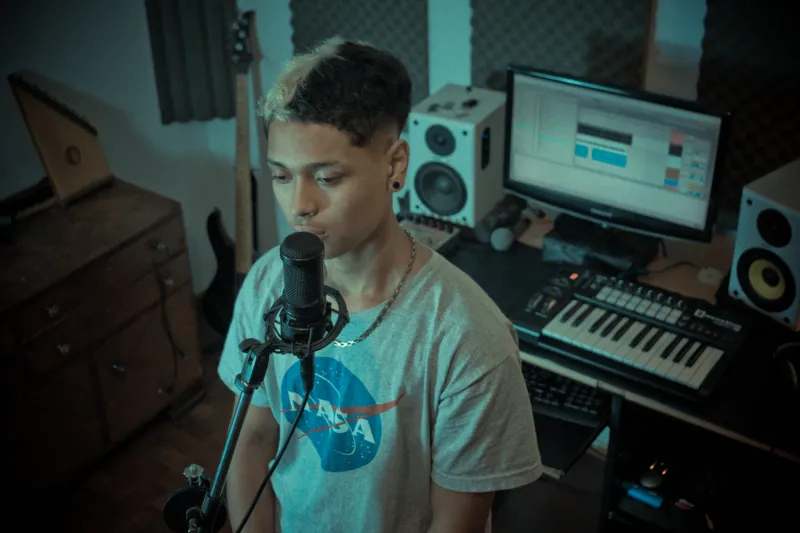
No Cameras, No Filter: What Geno Young's Real Creative Days Actually Look Like

No Cameras, No Filter: What Geno Young's Real Creative Days Actually Look Like
Everybody sees the finished product. The tracks, the visuals, the curated posts. But what actually goes into a full day when Geno Young is deep in creative mode and the cameras aren't rolling? Spoiler: it's not all cool lighting and perfectly timed moments. It's coffee that goes cold, voice memos recorded in parking lots, and a whole lot of sitting with yourself until something real surfaces.
Here's what a genuine creative day looks like — hour by hour, no edits.
The Morning Doesn't Start With Music
Most people assume the day kicks off with headphones in and speakers bumping. Nope. The first hour is intentionally quiet. We're talking phone face-down, no social media, no news cycle. Just water, a little stretching, and some time to let the brain wake up on its own terms.
There's usually a notebook nearby — one of those beat-up composition books you'd find at any Walgreens — and if something from a dream or a half-asleep thought feels worth keeping, it gets scribbled down before it disappears. Some of the best lyric ideas come from that foggy space between sleep and full consciousness. You don't chase them. You just leave the door open.
Breakfast is simple. Nothing fancy. The goal in the morning isn't to perform productivity — it's to protect the creative energy before the day has a chance to drain it.
The Mid-Morning Shift: Where Ideas Start to Move
Somewhere around 9 or 10 a.m., the creative engine starts warming up. This is when playlists actually come on — not necessarily Geno's own stuff, but a wide mix. Old soul records, some ambient stuff, maybe a podcast about film or storytelling. The point isn't to copy what's out there; it's to stay plugged into the broader culture and remind yourself why you do this in the first place.
This block of time is also reserved for what could generously be called "productive wandering." A drive with no destination. A walk around the neighborhood. Sitting in a coffee shop and just watching people move through their day. It sounds unstructured because it is — and that's kind of the whole point. Creativity doesn't always show up when you summon it. Sometimes you have to go find it in the mundane.
That random conversation with the barista? That could turn into a verse. The way the light hits a parking garage at 10:45 in the morning? That might become a visual concept. The best creative people aren't just making things — they're constantly collecting.
Studio Time: The Real Work Begins
By early afternoon, it's time to actually sit down and build. Studio sessions — whether that's a full professional setup or just a home rig with good monitors and decent acoustics — are where the collected pieces of the morning start to mean something.
And yeah, not every session is a hit. That's probably the biggest thing fans don't see. For every track that ends up on a project, there are five or six ideas that get shelved, reworked, or scrapped entirely. That's not failure — that's the process. You don't get to the good stuff without going through a lot of the not-yet-good stuff first.
The approach tends to be: get something down fast, even if it's rough. A scratch vocal, a basic beat structure, a melody hummed into a voice memo. The goal in the first pass isn't quality — it's capture. You can polish later. You can't polish something that doesn't exist yet.
Collaborators might drop through during this window too. A producer, a feature artist, a creative director bouncing ideas for visuals. Some of the most electric moments in the studio happen when someone unexpected walks in with a completely different perspective and flips the whole direction of a song in twenty minutes.
The Afternoon Reset
Here's a part of the creative day that often gets overlooked: the intentional break. Around mid-afternoon, everything stops. Not because the work is done, but because grinding straight through without coming up for air tends to produce diminishing returns. The ear gets fatigued. The brain stops hearing things clearly.
This is usually a food run, some time outside, maybe a gym session or a quick basketball game if the crew is around. The break isn't lazy — it's strategic. Coming back to a session with fresh ears is genuinely one of the most useful tools in the creative process. You'll catch things you missed. You'll hear where something feels off. You'll suddenly know exactly what a track needs because you gave yourself space to stop forcing it.
Evening: When Things Get Real
For a lot of creative people, the night hours hit different. There's something about the way the world quiets down after dark that makes the work feel more intimate, more honest. The late evening tends to be when the most personal material gets written — the stuff that actually says something, that comes from a real place rather than a calculated one.
This is also when Geno Young tends to reconnect with fans and the community, whether that's scrolling through comments, responding to DMs, or just keeping a pulse on what people are feeling. The relationship between an artist and their audience isn't a one-way broadcast — it's a conversation. And that conversation shapes the work in ways that are hard to quantify but impossible to ignore.
By the time the night winds down, there's usually a list of what got done, what needs more attention, and what new ideas showed up unexpectedly. Tomorrow's session starts tonight.
The Part Nobody Talks About
Here's the honest part: some days don't produce anything you'd want to share. Some days are just about showing up, staying in the habit, and trusting that the dry spells are temporary. Creative consistency isn't about being inspired every single day — it's about building a life and a practice that keeps you in the game long enough for the inspired days to show up.
That's what the cameras don't catch. The patience. The discipline dressed up as routine. The belief that what you're building matters even when it doesn't feel like it yet.
That's the real day in the life. And honestly? It's kind of beautiful in its own unfiltered way.